For military families, a safe home isn’t just a comfort — it’s the foundation of their health. When the walls around you contain lead paint or asbestos, the risks don’t stay in the walls. They enter your children’s bloodstream, settle in your lungs, and eventually show up as medical bills, specialist visits, and long-term healthcare costs that can strain a family’s finances for years.
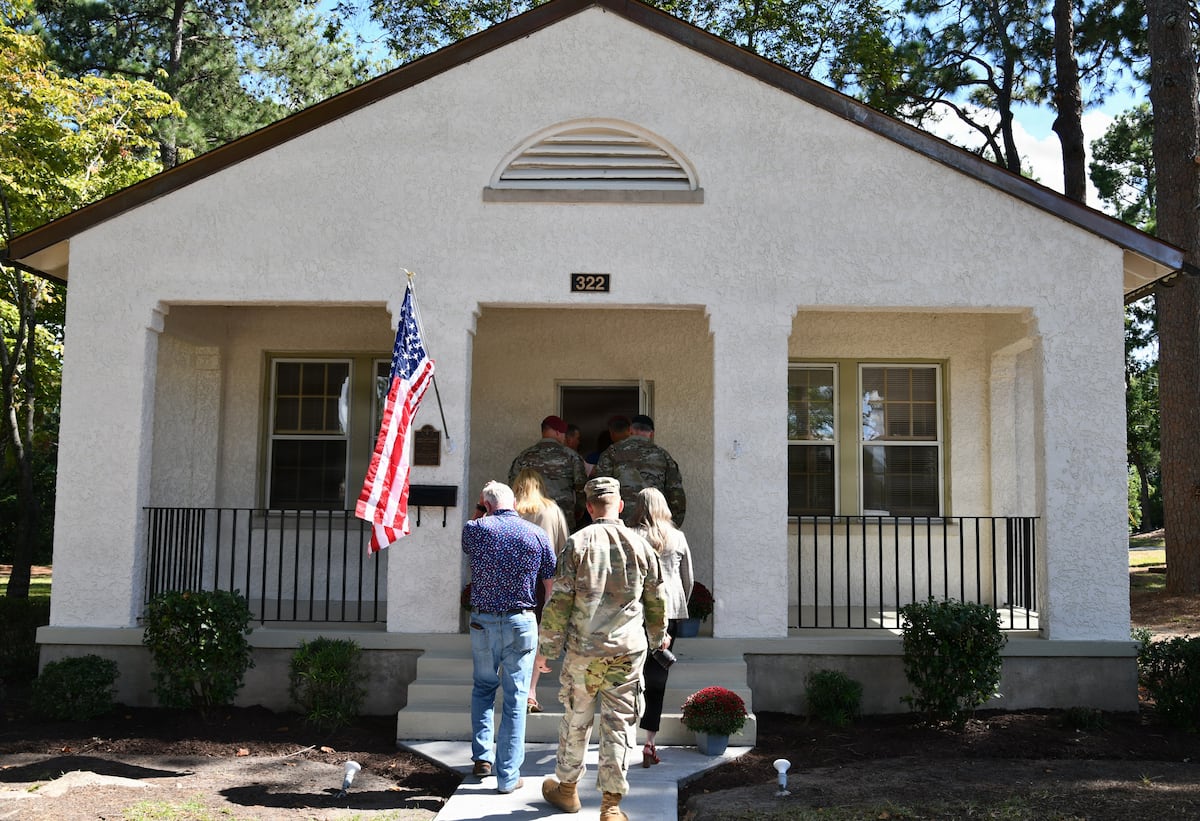
That’s why a renovation project now underway at Fort Bragg, North Carolina matters beyond bricks and mortar. Fort Bragg and Corvias officials — the privatized housing company managing the installation — recently celebrated the completion of the first wave of a 21-home historic renovation project. These homes, built between 1928 and 1939 and featuring stucco walls, copper gutters, hardwood floors, and basements, are being updated to meet the needs of today’s military families while addressing hazards that can cause serious, lasting harm to human health.
Old Homes, Real Health Risks
Fort Bragg has 230 homes designated as historic — all built before 1940. Across the broader Army, there are more than 30,000 historic homes that are over 50 years old, making the Army the largest holder of historic housing in the entire federal government. These properties fall under the requirements of the National Historic Preservation Act, which means renovations must carefully preserve their character even as they bring the homes up to modern safety standards.
The health stakes of neglecting these older homes are significant. Historic military housing has long struggled with lead paint and asbestos — two hazards that are both costly to remove and dangerous to leave in place. Lead exposure, particularly in young children, is linked to developmental delays, learning disabilities, and behavioral problems. Asbestos, when disturbed, releases fibers that can cause lung disease and cancer decades after exposure. For military families already navigating the demands of service life, these aren’t abstract risks — they are potential sources of real healthcare costs and long-term medical consequences that can ripple through a family for a generation.
When military children are exposed to lead or asbestos in their homes, the healthcare response often flows through the Tricare system — the military’s insurance program — or eventually through the VA for service members themselves. Preventing those exposures through proper remediation is, in effect, an investment in reducing downstream medical expenses for families and the federal healthcare system alike. A family that never has to treat lead poisoning in a toddler is a family spared from specialist appointments, developmental therapies, and the financial and emotional weight that comes with them.
What Renovation Actually Costs — and What It Saves
The Army estimates that historic homes currently take an average of 18 days to prepare between occupants — three more days than a standard home — and cost an average of $4,342 to turn over, compared to $3,681 for a non-historic unit. These numbers reflect the added complexity of working within preservation guidelines while also managing hazardous materials. But those upfront renovation costs pale against the potential long-term healthcare expenses that unsafe housing can generate.
Col. Luke Wittmer, Fort Bragg’s garrison commander, framed the project in terms of the people it serves:
“These residences are an important part of Fort Bragg’s history, but their greatest value is continuing to serve soldiers and families who live in these homes. This renovation preserves history while ensuring we continue to meet the needs of today’s families.”
Fort Bragg was established as a permanent Army post in 1922, and construction of the first permanent officers’ family quarters along Alexander and Hunt streets began in 1927. Noncommissioned officer family housing followed in 1928. Today, about 2,300 of the installation’s 6,104 total homes were built before 1960. Across the Army, 867 homes built before 1919 are spread across 19 installations in 13 states and the District of Columbia — a reminder of how widespread the challenge of aging military housing truly is.
Most of the military’s historic homes were folded into the privatized housing system that began transferring management to private companies in the early 2000s. The Advisory Council on Historic Preservation, the federal agency charged with protecting America’s historic places, has worked alongside the Army and other military branches to ensure that renovation plans balance historical integrity with the health and safety needs of the families who actually live in these homes.
Military family healthcare access remains an ongoing concern across the services. A planned outage of the Defense Enrollment Eligibility Reporting System (DEERS) is expected to temporarily affect the ability of pharmacies and healthcare providers to verify Tricare eligibility — another reminder of how tightly military family well-being is tied to the systems designed to support them. Keeping those families in safe, properly maintained homes is one of the most direct ways the military can protect both their health and their financial stability.
For more coverage of issues affecting military families and veterans, see recent reporting on nearly 500,000 veterans receiving a break from life insurance premiums, a legal battle over for-profit veterans’ claims processing, and the legacy of the outgoing AAFES director who expanded benefits for veterans and military families. You can also explore more stories from Army Times, and watch recent video coverage including Ukraine’s ‘Army of Robots’ and the future of autonomous warfare, a retired Green Beret’s mine-clearing mission in Ukraine, the latest on NORAD’s new warning system contract, and what to know before buying an electric vehicle.