As President Trump commences his second term, significant changes to U.S. refugee policies are underway, notably impacting the demographics of future arrivals. The administration is reportedly aiming to drastically reduce refugee admissions, predominantly favoring white Afrikaners from South Africa. This decision marks a stark shift in the historical patterns of U.S. refugee intake.
Meanwhile, in Arizona, a state known for welcoming a substantial number of refugees, local initiatives continue to support the integration of these newcomers. One such program, Shop Refugee, is making strides by equipping refugee women with valuable skills and fostering a sense of community.
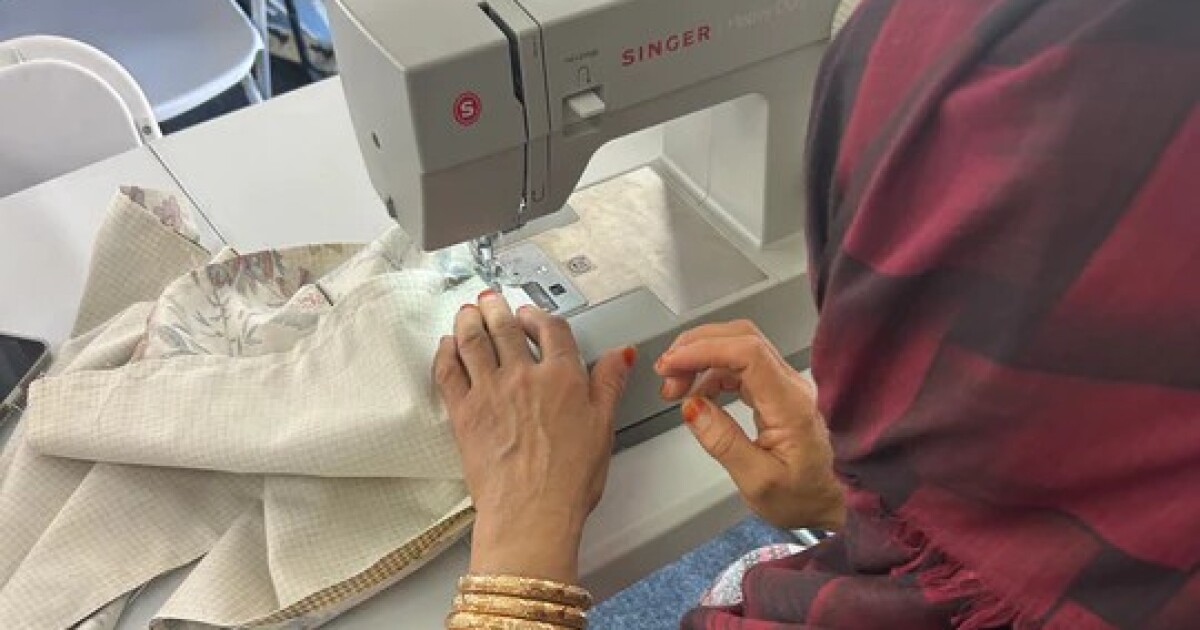
Shop Refugee, a unique training program, teaches refugee women the art of sewing and subsequently sells their creations, ensuring that the women earn nearly all the profits. Michelle Rogers, Sewing Manager, along with intern Allie Flynt, shared insights into the program’s impact during an interview.
Building Skills and Community
LAUREN GILGER: Michelle, it seems like your program has expanded significantly. Could you elaborate on its growth and objectives?
ROGERS: Certainly. Our program specifically targets stay-at-home refugee mothers who have limited access to comprehensive job training. We offer flexible, one to two-day courses that include English and sewing classes, along with childcare services, making it accessible for them.
GILGER: It’s impressive that you provide childcare. So, the women not only learn a skill but also keep most of the profits from their sold goods?
ROGERS: Exactly. We rely entirely on donated fabrics, which allows us to give 95% of the profits back to the women. This setup not only supplements their family income but also helps them build friendships and community connections, which are vital for their success.
GILGER: It sounds like the program is as much about building a community as it is about skill development.
ROGERS: Indeed, it’s fundamentally about friendship and creating a supportive environment.
Diverse Experiences and Overcoming Barriers
GILGER: Allie, you’re interning here. Could you describe your experience working with such a diverse group?
ALLIE FLYNT: The diversity is incredible. Women from different cultures, speaking various languages, and of all ages come together in a loving community. I didn’t sew before, but being part of this has been enriching as I support and learn alongside them.
GILGER: How do you navigate the language differences?
FLYNT: While it can be chaotic, we empower women to translate for each other and often communicate beyond words, through gestures and shared understanding. The presence and support we offer are profoundly meaningful.
GILGER: Could you share some experiences with the women you’ve met?
FLYNT: The hospitality and warmth of the refugee women are overwhelming. They welcome us into their lives, forming family-like bonds, which is humbling as we aim to integrate them into the U.S.
GILGER: Michelle, what do you enjoy about sewing, and how does it translate into this initiative?
ROGERS: Sewing is a family tradition for me, and it’s about creating something from scratch. This passion translates into teaching the women, helping them craft something unique, which can evolve into business opportunities.
GILGER: Have any participants gone on to find employment using these skills?
ROGERS: Yes, several women have leveraged these skills into job opportunities. We start with basic pattern-making, progressing to more advanced projects, and support them in taking these skills further.
GILGER: It seems like this program, though small-scale, is profoundly rewarding.
ROGERS: Absolutely. It mirrors the quilting circles of the past, offering a sense of community and continuity for these women who often leave their families behind.