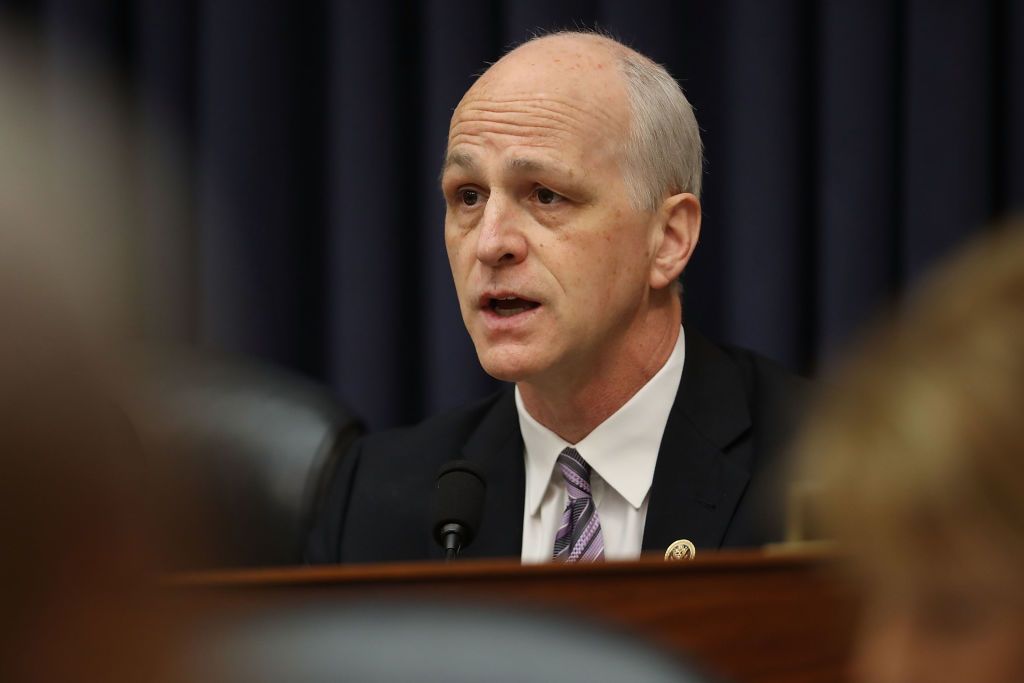
With Democrats reclaiming control of Congress after this week’s midterm elections, a familiar face is positioning himself to take charge of one of Washington’s most powerful military oversight bodies — and he’s not holding back on what he plans to do with it. Rep. Adam Smith of Washington state is seeking to return as chairman of the House Armed Services Committee, and his agenda is already taking shape.
In a letter sent Wednesday to his Democratic colleagues, Smith outlined a sweeping vision for congressional oversight of the Pentagon — one focused on reining in what he describes as a “runaway Executive Branch” and demanding greater accountability from the Trump administration on military spending, overseas operations, and the deployment of troops on American soil.
Smith’s Case for Stronger Oversight
Smith, who previously led the committee from 2019 to 2023 and currently serves as its ranking member, won re-election in his district on Tuesday. With Democrats now set to control both chambers of Congress, new committee chairmanships will be determined for the next legislative session — and Smith is making his case early.
His letter calls for more public testimony from senior defense officials and the restoration of a dedicated oversight subcommittee. Among his stated top concerns: U.S. military strikes in the Caribbean, the ongoing war with Iran — which he labeled “illegal” — and a proposed defense budget that would exceed $1 trillion. He argues that Congress has a responsibility to scrutinize how military power is being used and funded.
Smith has been a pointed critic of the Trump administration’s national security posture, arguing that an over-reliance on military force and unilateral decision-making — what he characterized as a belief that “might makes right” — has undermined America’s standing abroad and strained key alliances. In his view, the U.S. should be pursuing a strategy built on international partnerships, military deterrence, and avoiding costly entanglements.
Pentagon Spending Under the Microscope
A major thread running through Smith’s letter is the question of how the Pentagon spends money — and whether those spending choices actually serve the national interest.
He is pushing for a rebalancing of defense investment toward lower-cost munitions, uncrewed systems, and drone and missile defense capabilities. The urgency behind that call is underscored by a sobering reality: the war with Iran has used up to two-thirds of the U.S.’s missile interceptor stock, according to a Congressional Budget Office analysis. Rebuilding that stockpile could take at least five years. The U.S. has been burning through interceptors that can cost millions of dollars each — to shoot down adversarial drones that were built at a fraction of that price.
Smith acknowledged the importance of advanced weapons platforms, but argued the Pentagon must find a smarter balance between high-end systems and cheaper, more expendable options. He took direct aim at the president’s proposal for a new fleet of battleships:
“We need an appropriate mix of high-end survivable systems and lower-cost attritable capabilities, not a fleet of nuclear-powered battleships as proposed by the President,”
he wrote.
Smith also raised red flags about how the Pentagon awards defense contracts, calling for closer examination of whether those decisions truly benefit taxpayers or are shaped by favoritism. While he acknowledged that Congress has worked to streamline the military’s notoriously slow and bureaucratic procurement process, he maintained that lawmakers still need to know where defense dollars are going — especially as the military pours money into next-generation weapons systems.
The NDAA Challenge Ahead
Despite his sharp criticism of the administration, Smith said he remains committed to passing the annual National Defense Authorization Act — the law that sets military policy and funding levels each year. He admitted, however, that reaching a deal with Republicans would be
“extraordinarily difficult.”
The NDAA is already overdue. Senate Democrats blocked a procedural vote in July amid disputes over the Iran war and provisions related to Israel, leaving the legislation unfinished heading into the new session. How that gets resolved — and who controls the committee when it does — will help define the direction of U.S. defense policy for years to come.