In a tale of bravery and resilience, Deborah Sampson defied societal norms by disguising herself as a man to serve in the Continental Army during the American Revolution. Her journey from humble beginnings to becoming a soldier highlights a remarkable chapter in history that underscores the determination and courage of women who dared to challenge the status quo.
From Indentured Servant to Revolutionary Soldier
Born on December 17, 1760, in Plympton, Massachusetts, Deborah Sampson grew up in challenging circumstances despite her lineage connecting her to prominent Pilgrim families. Her ancestor, Gov. William Bradford, and military leader Myles Standish were among her forebears. When her father disappeared, the family plunged into poverty, forcing Sampson’s mother to disperse her children. At the age of 10, Sampson became an indentured servant to Deacon Benjamin Thomas, working on his farm while educating herself.
As tensions with Britain escalated into the Revolutionary War, Sampson decided to join the fight. The conflict ravaged Massachusetts, but after the 1775 Battle of Bunker Hill, the Continental Army gained control of most of the state. By 1780, the British had refocused their efforts southward, although they retained control over New York City.
A Woman Enlisting in the Continental Army
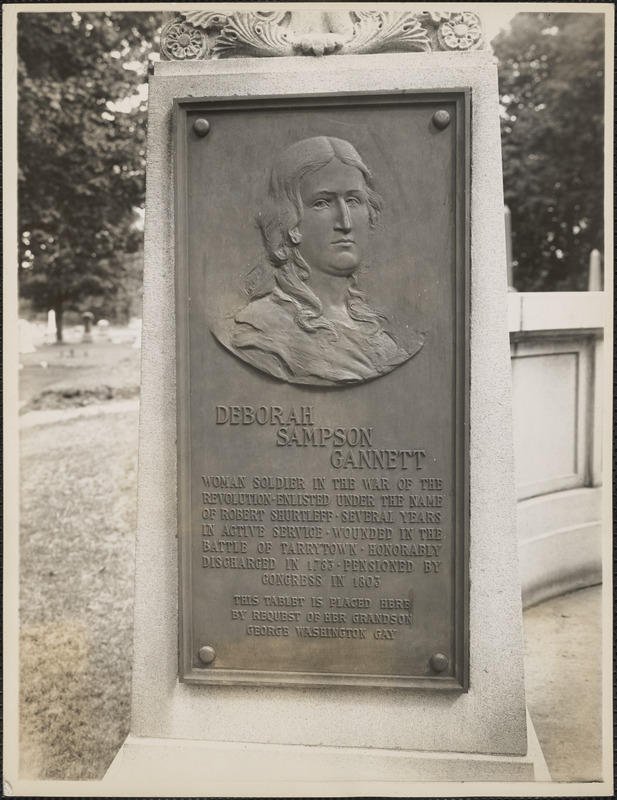
Despite regulations barring women from enlisting in combat roles, Sampson was determined to join the fight. Her first attempt using the alias Timothy Thayer was thwarted when a neighbor recognized her. Undeterred, she succeeded on May 23, 1782, enlisting as Robert Shurtleff in the Fourth Massachusetts Regiment. Her stature helped her maintain the deception, as the elite light infantry unit required soldiers to be at least 5 feet 5 inches tall.
Wounded in Combat and Later Military Service
As part of the light infantry, Sampson engaged in risky flanking and skirmishing missions in the Hudson River Valley. During a battle near Tarrytown, New York, she sustained a sword wound to her forehead and a musket ball injury to her thigh. Fearing exposure, she implored her comrades to leave her on the battlefield, but they insisted on taking her to a hospital.
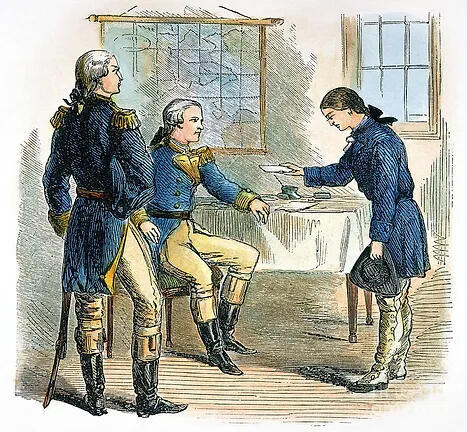
While there, she secretly performed surgery on her own leg, removing one musket ball with a penknife and needle, but some fragments remained lodged in her thigh. Her bravery and service earned her a position as General John Paterson’s aide. In 1783, she collapsed from a fever in Philadelphia, and a physician discovered her true identity. He kept her secret, allowing her to receive an honorable discharge on October 25, 1783.
The Battle for Benefits and Paul Revere’s Support
After marrying Benjamin Gannet in 1785 and starting a family, Sampson faced financial challenges. She petitioned the Massachusetts State Legislature for back pay owed to her, which was granted in 1792. Despite this, she continued to struggle without a military pension. Her lecture tour in 1802, where she shared her wartime experiences, garnered attention.
Paul Revere, moved by her plight, advocated for her before Congress, leading to her receiving a federal pension in 1805. The National Women’s History Museum notes her as the only woman to earn a military pension for Revolutionary War service. Sampson passed away on April 29, 1827. Her husband later sought survivor benefits, which Congress eventually approved, though he died before receiving them.
Women in the Military Today
It wasn’t until 1948 with the Women’s Armed Services Integration Act that women could serve as regular members in the U.S. military, although they were still barred from combat. This changed in 2013 when Defense Secretary Leon Panetta lifted the ban on women in direct combat roles. By 2015, all military positions were open to women.
Women now represent over 17.5 percent of the active-duty force. Notably, female recruitment surged by 18 percent in 2024, a key factor in the Army meeting its recruitment goals. However, new directives from War Secretary Pete Hegseth in 2025 requiring combat positions to meet “the highest male standard” have reignited debates about women’s roles in the military, echoing the challenges Deborah Sampson once faced.