In a significant demonstration of nuclear mobility, a small nuclear reactor was recently airlifted from California to Utah, marking a pioneering move by the Pentagon and the Department of Energy. This initiative illustrates the potential for rapid deployment of nuclear power to meet both military and civilian energy needs.
Last weekend’s nearly 700-mile journey transported a 5-megawatt microreactor, albeit without nuclear fuel, underscoring the Trump administration’s commitment to advancing nuclear energy. This comes in response to the growing power demands from sectors like artificial intelligence and data centers seeking sustainable energy sources.
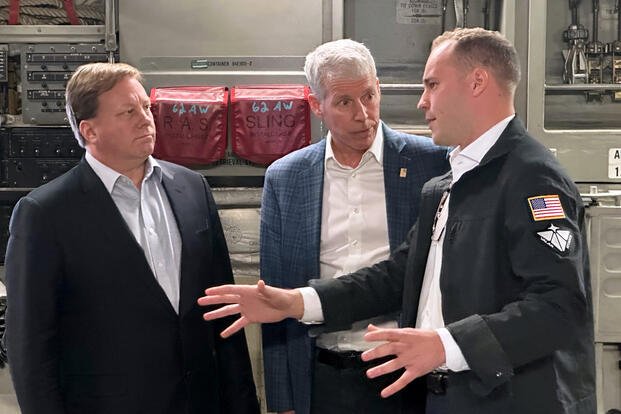
Accompanying the reactor, Energy Secretary Chris Wright and Undersecretary of Defense Michael Duffey highlighted the journey aboard a C-17 military aircraft as a critical step towards fast-tracking commercial licensing for microreactors. This is part of a broader strategy to redefine the U.S. energy framework under President Trump’s leadership.
The Push for Nuclear Power
President Trump has been a vocal supporter of nuclear energy, recognizing its role as a carbon-free power source. Despite his broader support for fossil fuels and skepticism towards renewable energy, he sees nuclear power as a crucial component of the future energy mix.
While some experts express concerns about the safety and cost-effectiveness of microreactors, Wright remains optimistic. Trump’s administration has issued executive orders empowering Wright to approve advanced reactor designs, bypassing the independent nuclear safety agency’s longstanding regulatory authority.
“Today is history. A multi-megawatt, next-generation nuclear power plant is loaded in the C-17 behind us,” Wright proclaimed, as the reactor embarked on a flight from March Air Reserve Base to Hill Air Force Base.
By July 4, the reactor, along with at least two others, is expected to achieve “criticality,” which Wright describes as “the start of a nuclear renaissance.”
Versatile Applications of Microreactors
The United States currently operates 94 nuclear reactors, contributing about 19% of the nation’s electricity supply. Recent efforts have focused on more efficient reactor designs, like the small modular reactors proposed by the Tennessee Valley Authority.
Microreactors, known for their portability, promise enhanced power delivery to critical locations. Duffey envisions these mobile reactors bolstering energy security on military installations, independent of civilian power grids.
The transport demonstration “brings us closer to deploying nuclear power where it’s needed, empowering our nation’s warfighters,” Duffey explained.
With an output potential of 5 megawatts, the reactor could energize approximately 5,000 homes, according to Isaiah Taylor, CEO of Valar Atomics. The startup aims to commence test sales next year, with full commercialization by 2028.
Addressing Safety Concerns
Despite the excitement, safety experts like Edwin Lyman, director of nuclear power safety at the Union of Concerned Scientists, remain cautious. He criticized the flight as merely showcasing the Pentagon’s logistical capabilities without addressing the feasibility, economic viability, or safety of the project.
Lyman highlighted unresolved issues, such as secure transport of fuel-loaded microreactors and nuclear waste disposal. Wright mentioned ongoing discussions with states like Utah to establish sites for fuel reprocessing or permanent disposal.
The reactor will undergo testing at the Utah San Rafael Energy Lab, with fuel supplied by the Nevada National Security site, Taylor confirmed.
“The answer to energy is always more,” Wright declared, emphasizing a shift from restrictive energy policies towards renewed nuclear expansion.