In a daring and high-stakes mission, U.S. forces executed a complex rescue operation deep within Iranian borders to recover a downed airman. The mission unfolded under immense pressure as Iranian troops moved swiftly to capture the aviator.
According to CIA Director John Ratcliffe, the operation’s success hinged on sophisticated intelligence that enabled U.S. forces to track the airman while staying ahead of Iranian forces.
“This was a no-fail mission,” Ratcliffe emphasized, underscoring the urgency to locate the aviator before Iranian forces could apprehend him.
Following the downing of a U.S. F-15E Strike Eagle over Iran, the U.S. launched an immediate search-and-rescue mission to find and recover one missing crew member within hostile terrain. The operation coincided with ongoing U.S. military actions in Iran and Tehran’s counterclaims regarding the incident.
The two crew members, dubbed “Dude 4-4 Alpha” and “Dude 4-4 Bravo,” ejected and were stranded behind enemy lines, as stated by officials.
For nearly two days, the downed airman evaded capture by Iranian forces, navigating challenging mountainous terrain, tending to his injuries, and using survival gear to signal his location, President Donald Trump reported.
As the situation intensified, Iranian forces, including Islamic Revolutionary Guard Corps units, converged on the search zone.
Inquiries were made to the Defense Department, United States Central Command, Air Force, the White House, and Iran’s mission to the United Nations for comments by Military.com.
Airman Pulled from Iran in High-Risk Rescue
President Trump revealed that the initial response involved over 20 aircraft navigating through hostile airspace, paving the way for a larger operation of over 150 aircraft, including fighters, bombers, tankers, and rescue platforms.
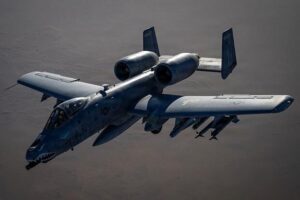
Late Thursday night, a U.S. Air Force combat search-and-rescue task force, equipped with A-10 “Sandy” aircraft, HC-130 refueling planes, and HH-60 Jolly Green II helicopters, penetrated Iranian airspace under heavy fire to rescue the first crew member.
The A-10 “Sandy” aircraft played a pivotal role by providing close air support and engaging enemy forces to safeguard the downed pilot and facilitate the rescue.
During the mission, one A-10 sustained enemy fire, leading to the pilot’s ejection over friendly territory, where he was safely recovered. After retrieving the first airman, U.S. forces focused on the second crew member, who was injured and located miles away, eluding Iranian forces.
A second rescue mission was initiated on Saturday once U.S. forces established contact with the injured airman, deploying a larger force as Iranian troops intensified their search, Caine said.
Trump noted that the operation utilized deception tactics to mislead Iranian forces actively hunting for the airman.
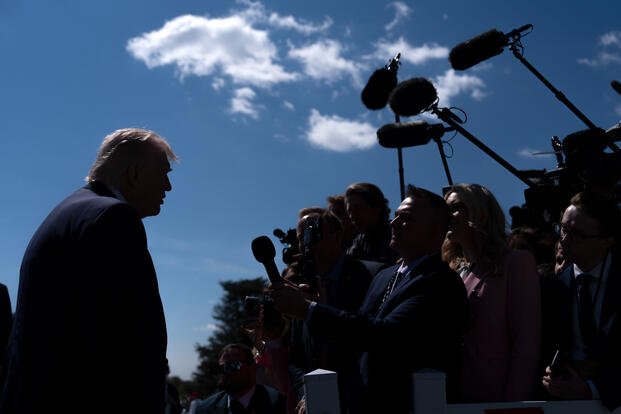
Throughout the mission, aircraft were targeted, and helicopters sustained damage while extracting personnel. Caine noted that one helicopter crew suffered minor injuries but are expected to recover.
Logistical hurdles arose when aircraft became stuck in sand upon landing, prompting U.S. forces to employ a contingency plan with smaller, faster aircraft while ensuring disabled planes were destroyed to prevent sensitive equipment capture.
Trump added that small helicopters were swiftly assembled in the field within 10 minutes to aid the extraction. Despite the challenges, U.S. forces successfully reached the airman, battled hostile forces, and evacuated him from the area.
Caine confirmed both airmen were safely returned to allied territory over 50 hours after the mission began, with no U.S. casualties reported.
Leak Triggered Race Against Time
Trump remarked that the mission’s peril intensified following a leak that disclosed the downing details, alerting Iranian authorities to the presence of a second missing airman.
“That leaker… put that man at great risk,” Trump remarked, highlighting how the leak prompted Iranian forces and civilians to join the search.
Reports from Trump indicated that Iranian authorities offered a reward for capturing the pilot, drawing numerous people into the search and significantly heightening the risk of capture.
The leak also complicated U.S. forces’ ability to operate covertly, increasing danger for both the airman and rescue teams.
Trump later stated that efforts are underway to identify the leak’s source, labeling it a national security issue with potential consequences.
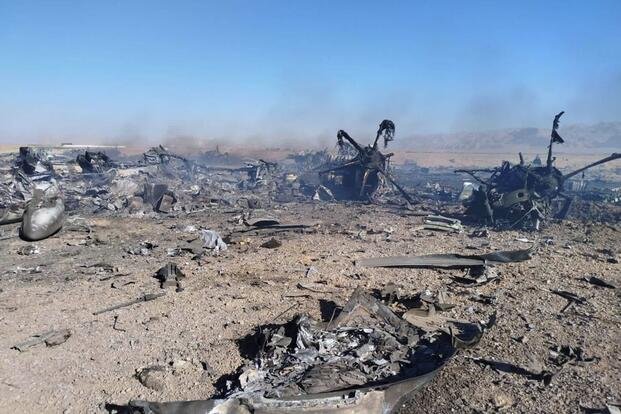
Ratcliffe disclosed that the CIA utilized both human intelligence and advanced technical capabilities to locate the airman, likening the effort to “finding a single grain of sand in the middle of a desert.”
He also mentioned that the agency conducted a deception campaign to divert Iranian forces from locating the pilot, creating conditions conducive to the successful rescue.
U.S. intelligence verified the airman’s safety and concealment in mountainous terrain before rescue forces were dispatched, Ratcliffe stated.
Iran Challenges US Account
Iranian officials have contested crucial aspects of the U.S. narrative, alleging American forces incurred losses during the rescue mission and dismissing Washington’s version of events.
The conflicting narratives reflect an escalating information war between Washington and Tehran as each seeks to control the story of a rare U.S. operation within Iranian territory.
Defense Secretary Pete Hegseth announced that further strikes are anticipated to escalate, cautioning that Iran “has a choice” as U.S. operations expand.
Unresolved issues persist, including the airman’s identity, the full extent of involved forces, and whether more operations are in the pipeline.