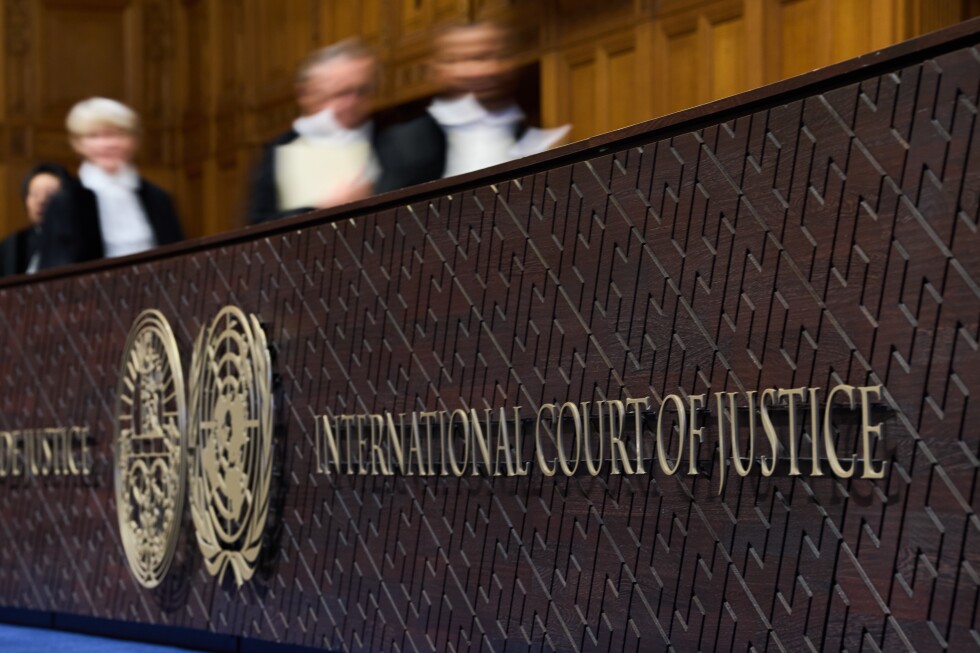
In a momentous address celebrating the World Court’s 80th anniversary, United Nations Secretary-General António Guterres highlighted the pressing issue of the erosion of international law. Speaking in the Great Hall of the International Court of Justice in The Hague, Guterres emphasized, “The force of law must always prevail over the law of force.”
This commemoration of the United Nations’ highest court comes amid challenges to the international legal system. Notably, U.S. President Donald Trump recently threatened significant infrastructure in Iran, raising concerns among military law experts about potential war crimes. Meanwhile, Sudan is embroiled in a war between its military and paramilitary forces, now in its fourth year, and Russia persists in its assault on Ukraine despite an ICJ order.
According to Janina Dill, an international law expert at Oxford University, “Powerful states have thrown out the rule book and perform disdain for international law,” as reported by The Associated Press.
The ICJ is currently handling an unprecedented number of cases, including those related to the Gaza conflict, the Ukraine war, and matters concerning climate change.
Presiding Judge Yuji Iwasawa reiterated that the court’s role is to “interpret and apply international law rigorously and in good faith,” addressing the complex challenges it faces.
Founded post-World War II, the ICJ settles disputes between nations, with U.N. General Assembly and other bodies able to seek its advisory opinions. While all 193 U.N. member states are part of the ICJ, not all recognize its jurisdiction automatically. Starting with 51 participating countries at its first session in 1946, the court has grown, marking its anniversary with King Willem-Alexander of the Netherlands in attendance.
The ICJ’s first case was brought by the United Kingdom against Albania in 1947 over naval ship damages in the Corfu Channel. Presently, the court is examining genocide allegations against Myanmar concerning the Rohingya and Israel for military actions in Gaza. Both nations refute these claims.
Some issues the court faces date back before its establishment, such as Guyana’s request for a ruling on its border dispute with Venezuela, a matter ongoing since 1899.