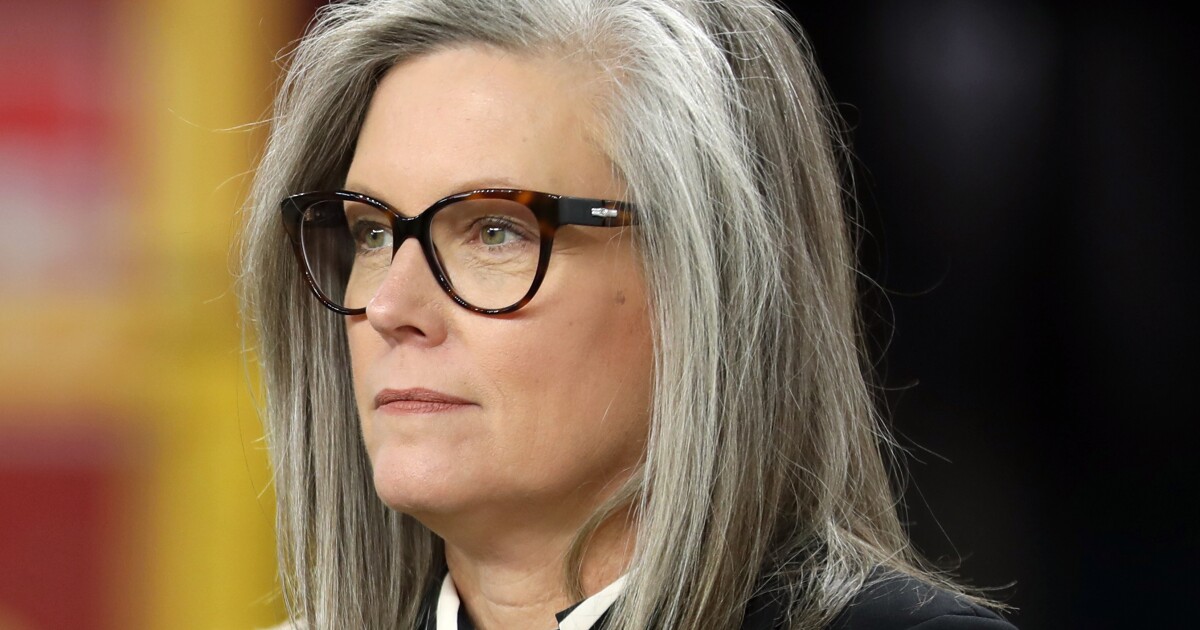
Amid ongoing budget discussions, Democratic Governor Katie Hobbs has unveiled a proposed $17.7 billion state budget, primarily aimed at enhancing affordability. However, this plan hinges on uncertain federal reimbursements and yet-to-be-secured agreements with Republican lawmakers.
Central to this year’s budget talks are tax cuts, influenced by the passage of H.R.1, famously referred to as President Donald Trump’s “big beautiful bill.”
Governor Hobbs has put forward a “middle-class tax cut package” valued at approximately $250 million. This proposal diverges from the broader tax reductions mandated by H.R.1 and contrasts with the Republicans’ $441 million plan for the current fiscal year.
The tax cut initiative is part of a larger agenda focused on affordability, with significant emphasis on housing. Hobbs plans to allocate remaining federal American Rescue Plan Act (ARPA) funds, initially intended for COVID-19 relief, to establish a Housing Acceleration Fund.
This fund will combine ARPA money with private investments, potentially generating up to $300 million for workforce housing development.
Additionally, Hobbs suggests a second housing program funded by ARPA dollars along with a proposed $3.50 tax on short-term rentals. This initiative aims to increase the income eligibility for utility assistance, potentially benefiting 30,000 more residents through the federal LIHEAP program.
Another aspect of the housing strategy includes boosting funds for weatherization programs to enhance energy efficiency, thereby reducing utility costs.
Governor Hobbs also intends to maintain funding for existing initiatives that make meals, child care, and vehicle repairs more affordable for eligible residents. This includes school meal grants and the SUN Bucks program, which assists families with children’s meals during the summer.
A substantial portion of the budget, $44.8 million, is earmarked for continuing the Child Care Assistance Program operated by the Department of Economic Security.
Further, Hobbs plans to sustain a program that supports vehicle repairs for Arizonans whose cars fail emissions tests.
Significant Budget Reductions
The enactment of H.R. 1 by Trump and Congressional Republicans introduced substantial cuts and modifications to Medicaid and SNAP benefits, expected to save billions. However, these changes present financial challenges for states.
Hobbs’ budget allocates over $60 million to hire the necessary personnel for implementing new work requirements and managing paperwork within SNAP and Medicaid, amidst penalties for high error rates that could cost the state over $190 million.
The governor is also allocating millions to address the impact of these changes, with projections indicating a potential loss of medical coverage for 190,000 Arizonans, resulting in billions in lost federal funding for hospitals.
This includes more than $4 million directed to hospitals and $3 million to assist individuals with navigating new Medicaid requirements.
Funding the Initiatives
Governor Hobbs’ budget outlines several new funding sources, including an increase in the fee for sports betting companies, such as DraftKings and FanDuel. Currently, these companies pay a fee capped at 10% of their revenue, but Hobbs proposes raising the fee to 45% for larger companies earning at least $75 million in monthly revenue.
Slater, a spokesperson for Hobbs, remarked, “I think that we have a very reasonable and balanced budget based on, I think, some pretty reasonable assumptions about fees that we can levy on sports betting.”
Raising the fee to 45% would position Arizona among the states with the highest sports gambling fees, following New Hampshire, New York, Rhode Island, Delaware, Illinois, and Oregon.

The reaction of Republicans, who hold a majority in the state Legislature, to Hobbs’ proposal to increase the sports betting fee remains uncertain. This fee was originally established by the Legislature and signed into law by former Republican Governor Doug Ducey in 2021.
Republican legislators have already voiced criticism over other new fees proposed by Hobbs to fund budget priorities, including a $3.50 nightly fee on short-term rentals to support affordability initiatives like expanding utility assistance programs.
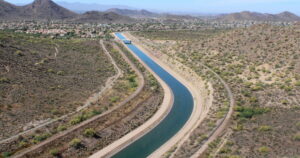
Additionally, Hobbs advocates for a new water usage fee on data centers aimed at financing water projects to address potential reductions in Arizona’s Colorado River water allocation. However, some Republicans express doubts about its approval.
Senator T.J. Shope (R-Coolidge) commented on Hobbs’ proposals, stating, “I kind of lost count of the amount of taxes and fees we’re talking about adding. So we know those aren’t going anywhere.”
The governor is also proposing modifications to the school voucher program, though these changes face legislative challenges. Hobbs suggests setting an income cap of $250,000 for eligibility, potentially saving the state around $89 million. This proposal mirrors federal income caps established under Trump’s policies, which created a voucher-style tax credit.
“We saw that they are supportive of income caps on school vouchers. And so we think that this is a pretty reasonable proposition for them to get behind,” stated Slater.
Moreover, the budget anticipates a substantial federal reimbursement for border security and immigration enforcement, which could provide Arizona with nearly $760 million over the next two years. However, the timing and amount of these federal disbursements remain uncertain as border states vie for limited funds.
Texas, for example, has requested $11 billion, accounting for over 80% of the available funding.
Both Hobbs and Republican leaders in the Legislature are lobbying the federal government to ensure Arizona receives adequate reimbursement after previous shortfalls in federal funding for rural hospitals.

Optimizing State Government
The governor’s office anticipates saving approximately $100 million by 2029 through enhanced efficiency and waste reduction in state government operations. Slater emphasized that current government employees would not face layoffs, although the governor proposes reducing the cap on the number of employees state agencies can hire.
Plans include investing in artificial intelligence training for state employees to boost efficiency and improving procurement processes to ensure cost-effective contracts across government agencies.
Additionally, the governor proposes selling vacant properties and leasing government-owned land for energy projects such as solar farms. However, new solar projects must navigate local zoning processes, a significant challenge for developers.
Additional Priorities
Hobbs’ budget assumes the extension of Proposition 123, which allocates state land trust revenue for education. Although both Democrats and Republicans support the continuation of Prop. 123, negotiations over its specifics remain unresolved.
The governor’s budget includes additional funding for the Department of Child Safety, combining $37 million in state funds with $14 million of ARPA dollars to address group home caseloads.
Moreover, $4.1 million in ARPA dollars is allocated to increase foster care rates, potentially reducing the number of children in group homes and improving foster care outcomes.