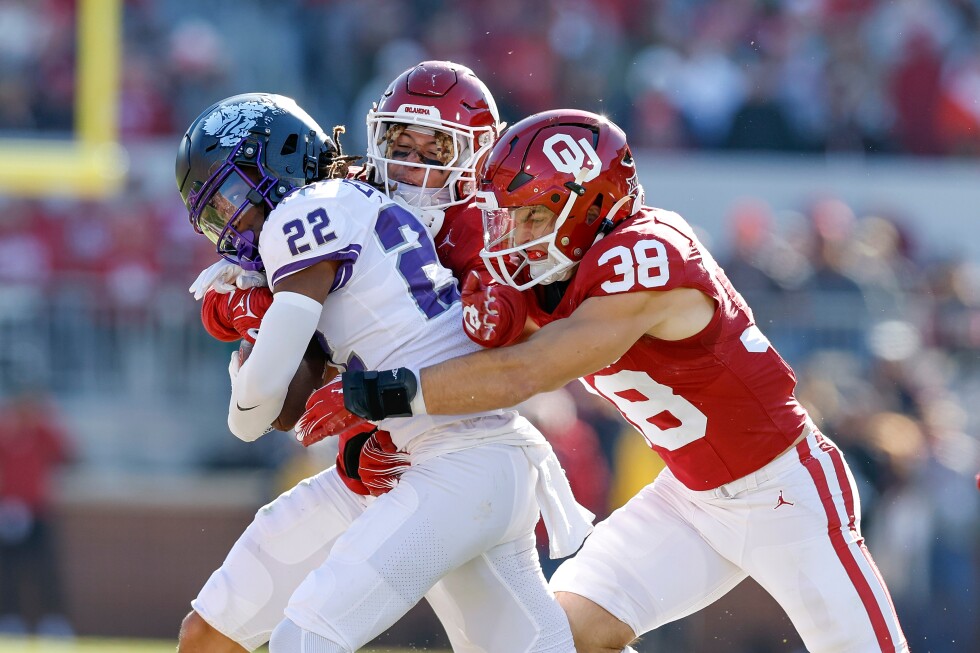
In a significant development for college athletics, Oklahoma linebacker Owen Heinecke has secured permission to rejoin the Sooners’ roster, just in time for their annual spring game. The decision came after a Cleveland County judge ruled in favor of Heinecke, granting a preliminary injunction against the NCAA.
NCAA Ruling Overturned
Cleveland County District Judge Thad Balkman issued the ruling, stating that the NCAA “failed to consider the totality of the case.” With this decision, Heinecke can immediately return to the field. It remains uncertain whether the NCAA will choose to appeal this ruling.
Following the court’s decision, Heinecke expressed his excitement by contacting Sooners coach Brent Venable with the words, “Let’s go coach!”
Path to Eligibility
Heinecke’s journey to this point has been complex. Initially, he played lacrosse at Ohio State, participating in three games in February 2022, which inadvertently cost him a year of eligibility. After transferring to Oklahoma to play football, he sat out a year due to injury. In the 2023 and 2024 seasons, he mostly contributed on special teams but emerged as a key player last season, recording 74 tackles, including 12 tackles for loss.
Despite Oklahoma’s efforts to secure an eligibility waiver for him, the NCAA denied the request in January and upheld this decision upon appeal in February.
Legal Battle and Future Prospects
During the legal proceedings, Heinecke’s attorneys argued that his loss of a year of eligibility was due to circumstances beyond his control. They highlighted that Ohio State’s lacrosse coach ignored Heinecke’s request to redshirt to recover from high school injuries. The legal team accused the NCAA of “breaching its duty of good faith and fair dealing” by denying an additional year of eligibility.
Heinecke has been proactive in preparing for his future, hiring an agent and participating in events like the Senior Bowl and NFL scouting combine while pursuing a master’s degree in accounting. His return to college football aims to bolster his draft prospects.
Broader Implications
This case unfolds as an NCAA panel considers potential changes to eligibility rules, which may impact future athletes. The proposed changes reflect language from an executive order issued by President Donald Trump, suggesting athletes receive five years of eligibility, starting at 19 years old or upon high school graduation. However, injuries would not qualify for exceptions under the new proposal, a common reason for requesting additional eligibility.
Stay updated on this and other college football stories by signing up for alerts here. For more information on AP college football, visit the AP Top 25 college football poll and the college football hub.