Mexican Vineyard Boosts U.S. Consumer Access to Fresh Grapes
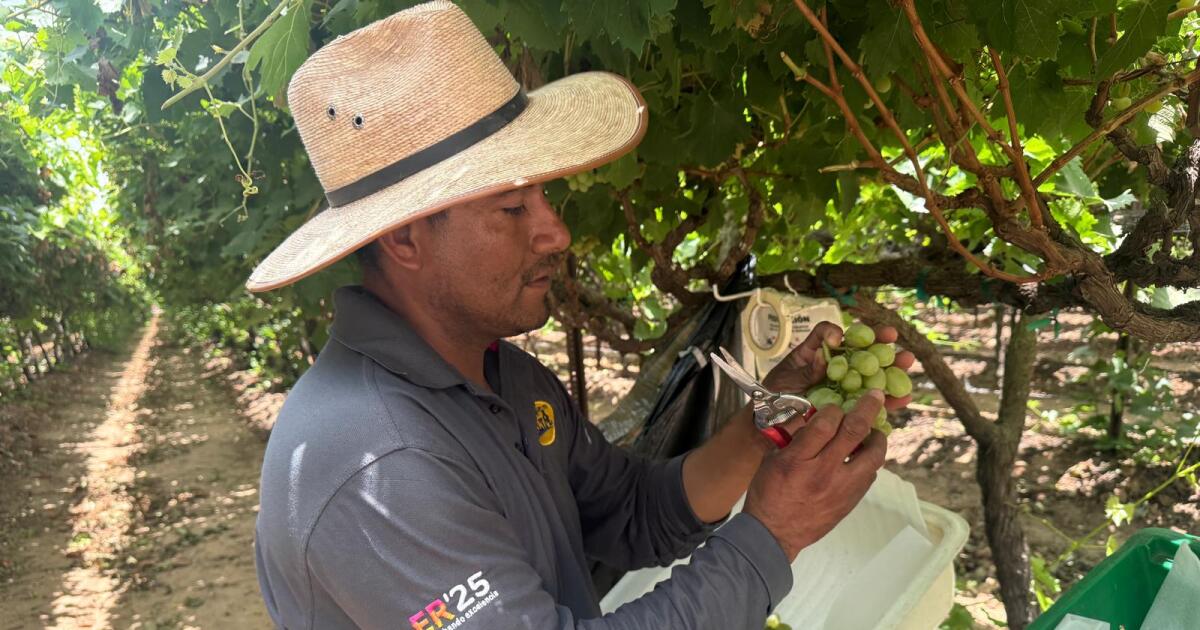
Under the canopy of lush vines in Sonora, Mexico, farmworkers are busy harvesting Cotton Candy table grapes. These sweet, pale-green grapes are picked to reach U.S. markets, particularly in Arizona, by nightfall. Alejandro Villaseñor, the production overseer at the expansive Pozo Manuel vineyard, notes that their harvest schedule precedes that of California’s grape producers, giving them a unique market advantage.
“We are harvesting in a time of the year where there is nobody harvesting but us,” Villaseñor shared.
The import of fresh produce from Mexico to the U.S. is a thriving industry, significantly shaping the availability of fruits and vegetables in America. This cross-border trade, facilitated by the United States-Mexico-Canada Agreement (USMCA), is essential for maintaining a year-round supply of fresh produce without tariffs. However, the future of this agreement hangs in the balance as renegotiations loom.
Former President Donald Trump has expressed skepticism about renewing the USMCA, stating, “I don’t know that I’m going to renew it. Because to be honest with you, the United States does much better. We don’t need anything that Canada has, we don’t need anything that Mexico has, but they need everything that we have.”
Despite this, many experts argue that the U.S. does benefit from Mexican imports, such as the abundant fields of fresh produce in Sonora. Annually, Arizona alone receives over $275 million worth of table grapes from Mexico, highlighting the strong demand in the U.S. market.

Pozo Manuel employs over 1,000 migrant workers during the grape harvest, providing accommodations such as dorms, a gym, and medical facilities. This growth in operations is indicative of the trade’s impact, which has increased the availability of fresh produce in the U.S. Daniel Sumner, an agricultural economist, notes that the shift away from canned fruits to fresh produce is a result of this trade.
“Canned fruits in the United States have gone way downhill, whether it’s peaches or pears or you name it, because people have access to fresh berries and other fresh fruits year-round,” Sumner explained.
As negotiations around the USMCA continue, uncertainty looms over its future. Luis Ribera, an agriculture economist, suggests that bilateral agreements could be a strategic move, providing the U.S. with more negotiating power. However, Joe Glauber warns that imposing tariffs could backfire, leading to similar measures on U.S. commodities like corn and soybeans.

Amidst the negotiations, broader political tensions between the U.S. and Mexico are adding complexity to the discussions. Jaime Chamberlain, a produce distributor from Nogales, Arizona, emphasizes the mutual dependence between the two countries.
“We cannot feed our own domestic population,” Chamberlain said. “We need each other to feed each other.”
Villaseñor, observing the grape harvest at Pozo Manuel, recognizes the intertwined nature of U.S. and Mexican economies. He warns that tariffs could ultimately lead to higher prices for consumers.
“The ones who are going to suffer will be the consumers,” Villaseñor expressed. For now, he remains committed to nurturing the vineyard, ensuring the quality of grapes produced.
“We have a good product here,” Villaseñor concluded. “There’s not going to be a big problem if we are doing our best.”