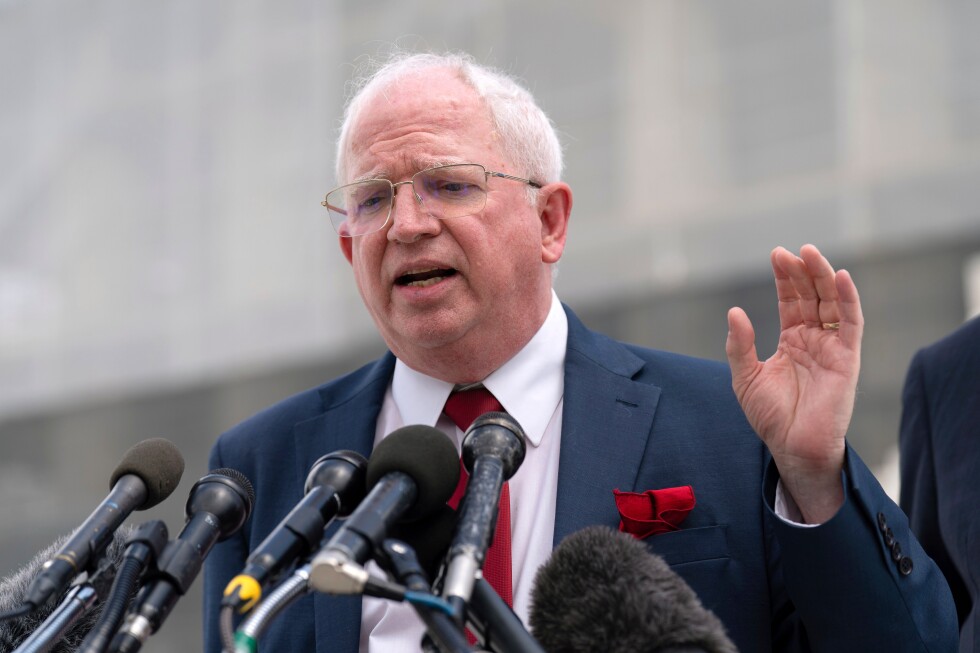
A significant legal decision has emerged from California, where the state’s Supreme Court has disbarred attorney John Eastman, known for his involvement in efforts to challenge the 2020 presidential election outcome. This decision concludes a prolonged investigation and legal process initiated by the state bar.
On Wednesday, the California Supreme Court ruled that Eastman’s name be removed from the state roll of attorneys. The decision followed a recommendation in 2024 by a State Bar Court judge, advising the revocation of his law license. Eastman had attempted to justify his actions as mere legal counsel, a defense that the court ultimately rejected.
According to George Cardona, chief trial counsel for the State Bar of California, the court’s ruling is based on “clear evidence” showing Eastman’s dissemination of false information regarding the 2020 election, which aimed to deceive public officials and the American populace.
“The Court’s order underscores that Mr. Eastman’s misconduct was incompatible with the standards of integrity required of every California attorney,” Cardona stated, highlighting the gravity of the allegations against Eastman.
In response, Eastman’s attorney, Randall Miller, expressed concerns over the ruling’s implications for constitutional rights, indicating plans to appeal to the U.S. Supreme Court. Miller argued that the decision conflicts with established Supreme Court precedents concerning First Amendment protections within attorney discipline.
The States United Democracy Center, which had previously lodged an ethics complaint against Eastman, welcomed the disbarment. Christine P. Sun, a senior vice president at the nonprofit, remarked on the enduring impact of Eastman’s actions on the democratic process.
Eastman played a pivotal role as an advisor to former President Trump leading up to the January 6, 2021, Capitol attack. He authored a memo outlining a plan for then-Vice President Mike Pence to reject legitimate electoral votes, attempting to prevent President Joe Biden’s certification.
The prosecution portrayed Eastman as constructing an unfounded legal theory aimed at overturning the election results through fraudulent claims. Eastman’s defense argued that his actions were intended to delay electoral vote counting, allowing states to examine supposed voting irregularities. These claims, however, were consistently dismissed by the courts, including by judges appointed by Trump.
Eastman also faced legal challenges in Georgia, where he was charged alongside Trump and others in a case that alleged a conspiracy to overturn the election outcome. This case was dismissed in November, following a series of legal proceedings.
In a related development, Trump had issued pardons, including for Eastman, covering federal offenses connected to efforts to contest the election results. These pardons were announced earlier in November.
Beyond his involvement in the 2020 election challenges, Eastman has a notable legal background. He served as a law clerk for U.S. Supreme Court Justice Clarence Thomas and was the dean of Chapman University’s law school from 2007 to 2010. His tenure at Chapman University concluded in 2021, following calls from over 160 faculty members for the institution to address his controversial actions.
The California State Bar remains the sole regulatory body in the U.S. specifically dedicated to the discipline of attorneys, underscoring the significance of its decision in Eastman’s case.