Arizona Midterms Reflect Shift in Energy Priorities Amid Rising Costs
As the dust settles from the recent midterm elections, a clear message has emerged from Arizona and across the nation: a significant portion of the electorate is dissatisfied with the current trajectory of energy policies. This sentiment has contributed to several Democratic victories, with many voters expressing discontent over President Trump’s approach to energy and foreign policy.
Manish Bapna, president and CEO of the Natural Resources Defense Council, voiced this perspective during a Nov. 4 press conference organized by Climate Power. “Voters were clearly angry about the disastrous impacts of the Trump energy agenda, and Republicans paid a very high price for that,” Bapna stated. His criticism focused on executive actions like the national energy emergency order, which prioritized oil and gas projects, and the withdrawal of offshore wind permits, which halted projects with the potential to generate 7-gigawatts of energy, enough for millions of homes. A Massachusetts federal judge later found these wind suspensions unlawful, reversing the order.
Additionally, Trump’s decision to terminate the Solar for All program — a key component of the Inflation Reduction Act aimed at promoting solar energy — was overturned by a Trump-appointed judge, marking another judicial rebuke of the administration’s energy policies.
Bapna attributed rising consumer costs to the cessation of renewable projects amid growing U.S. energy demand, predominantly driven by data centers, and geopolitical tensions affecting oil supplies. He noted, “Republicans used to talk about an all-of-the-above energy policy, but when they achieved a trifecta in Washington, they went all in on a fossil fuel only agenda.”
In Arizona, Monica Sandschafer of Mi Familia Vota highlighted the local impact of these policies. The organization, which focuses on voter mobilization, reported that over $3.5 billion in clean energy projects have stalled since Trump’s re-election, disproportionately affecting the Latino community, which is significantly represented in construction jobs.
Sandschafer emphasized the financial strains on Arizona families, citing a 11-15% increase in utility prices since Trump’s return to office. Over 161,000 households in the state are reportedly behind on their utility bills, with the rising cost of living a common concern among voters. “We’re seeing costs go up over and over again for families,” she noted.
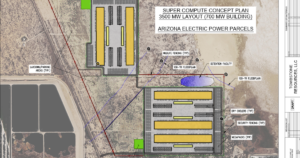
A voter research group, Equis, found that many Arizona voters linked increased energy bills to the development of data centers, supporting measures to cap utility rate hikes and limit new data center projects. The Democrats’ potential gains on the Arizona Corporation Commission, which regulates utilities, reflect this sentiment, as both Republican candidates have conceded the race.
Sandschafer credited Democrats Jonathon Hill and Clara Pratte for effectively communicating their stance against unchecked data center expansion, contrasting with Republican candidates accused of enabling rate hikes. Congressman-elect Amish Shah and Attorney General Kris Mayes, both Democrats, also campaigned against data center proliferation, securing their electoral victories in traditionally Republican areas.
For more information on the energy crisis and related impacts, visit Climate Power. Further details regarding offshore wind permits can be found here and the Massachusetts federal ruling here. Information on the Solar for All program ruling is available here.
“`